Baltimore Building of the Week: Shingle Style

This edition of the Baltimore Building of the Week from Dr. John Breihan, highlights an architectural style as common for detached houses of Baltimore’s outer neighborhoods as the Italianate Rowhouse is to the neighborhoods close to downtown,

Image courtesy Jack Breihan

The exposed timbers of the Stick Style, found on last week’s Mt. Washington Presbyterian Church, were one way that American builders broke free of the French and English Victorian deigns of the late 19th century. Another way, also based on the abundance of wood for building in North America, was the “Shingle Style.” The origin of the name is unmistakable – buildings (primarily houses) were covered in “cedar shake” shingle siding, allowed to weather naturally. In New England, this meant gray, in Baltimore’s climate dark brown. Other “natural” materials included slate roofs and fieldstone foundations and chimneys. Shingle designs also feature large geometrical masses, like big triangular gables and cylindrical turrets. The gambrel-roofed house depicted here stands in Roland Park, Baltimore’s first “garden suburb.” Developed in the 1890s it broke free of the grid pattern of streets in favor of leafy lanes that mirror the underlying natural topography.
2010 Award Winner: Miller’s Court

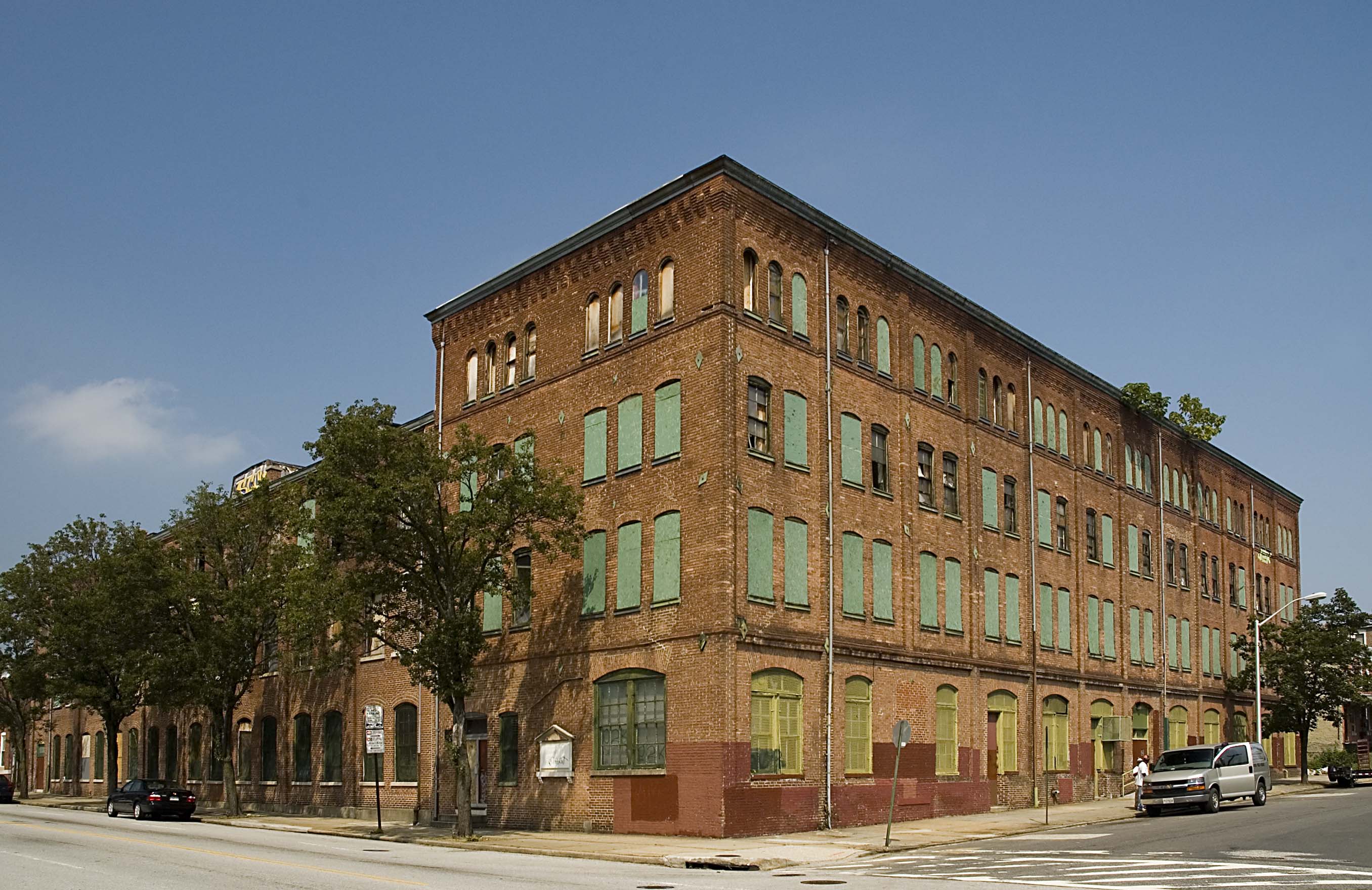
Miller's Court before renovation, photo courtesy Tom Terranova

Miller's Court after renovations, photo courtesy Brigitte Manekin

Constructed in 1874, the former H. F. Miller and Son’s Tin Box and Can Manufacturing Company at 2601 N. Howard Street served as a manufacturing site for the American Can Company. Vacant for the past 20 years, this landmark building has experienced a renaissance as Miller’s Court–a mixed-use redevelopment offering affordable apartments for teachers and office space for nonprofit organizations that work with the city’s school system. To boot, the rehabilitation work combined the highest preservation standards with the gold standards for green and sustainable design. The end product is already breathing life into Howard Street and the surrounding community. The Adaptive Reuse and Compatible Design Award went to owner Seawall Development, architect Marks Thomas, and contractor Hamel Builders.

Celebrate 150 years of Druid Hill Park on foot and by bike

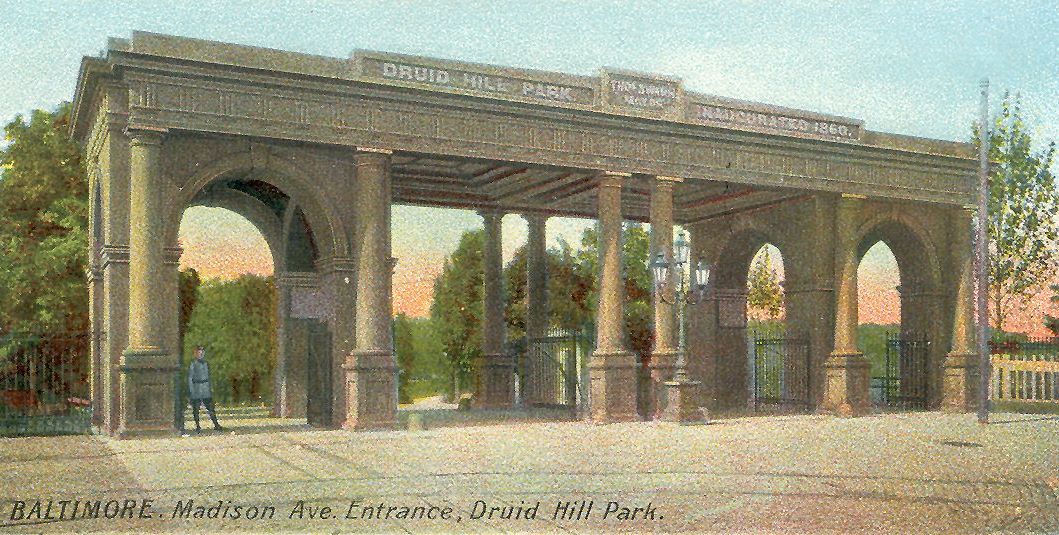
This year marks the 150th anniversary Baltimore City’s Druid Hill Park, established on October 19, 1860. This major urban park of 745 acres is one of the oldest urban parks in the country and a direct result of the early American Public Parks Movement. Only Central Park in New York City, 1858, and Fairmont Park in Philadelphia, 1859, pre-date Druid Hill Park. To commemorate the occasion, the Friends of Druid Hill Park, in partnership with Baltimore Heritage, AIA Baltimore, the Reginald F. Lewis Museum of Maryland African American History & Culture, and sponsored by Tour dem Parks, Hon, is leading a selection of walking and bicycle tours on Saturday, October 16 including:

  • 11:00 am to 1:00 pm – Historic Park by Foot
  • 1:00 pm to 2:00 pm – Streetcars in the Park
  • 3:00 pm to 4:30 pm – Peddle through the Park Bike Tour

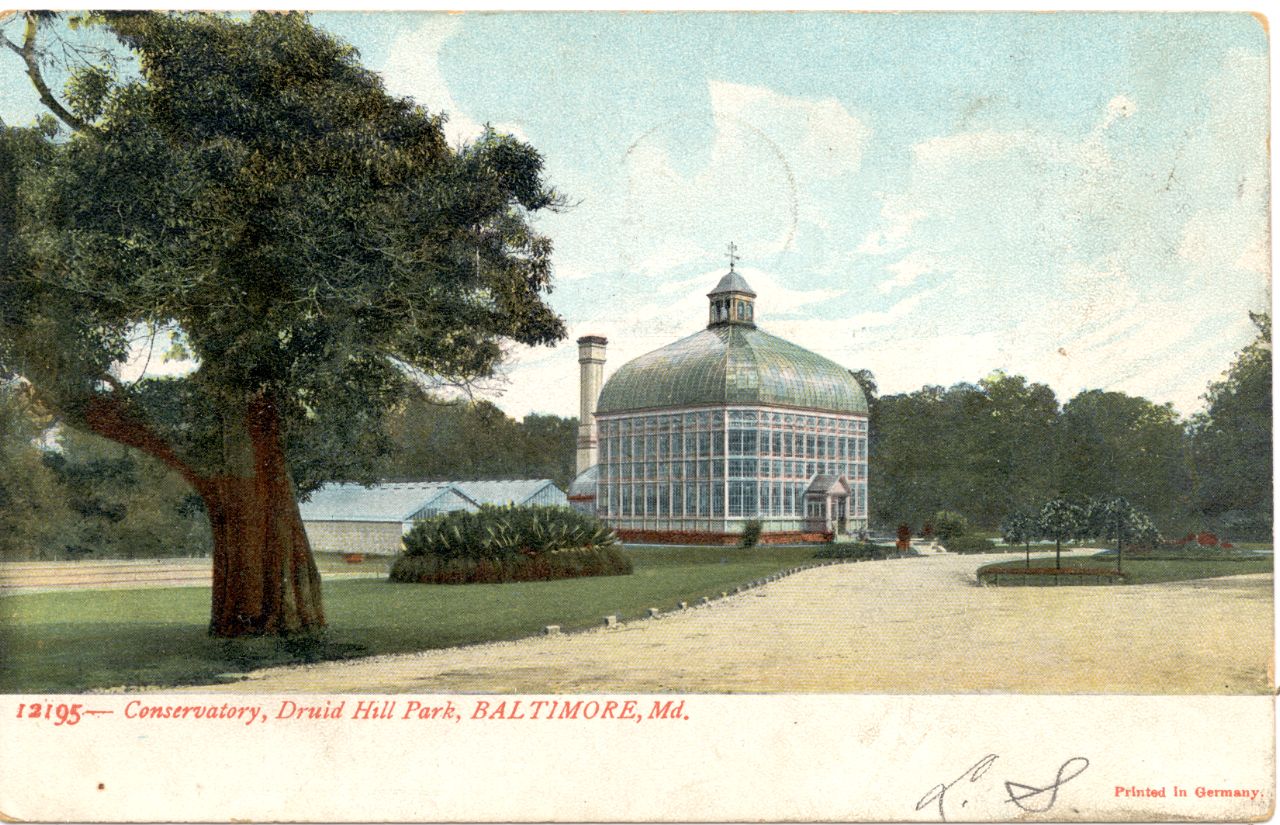
All tours leave from the “Druid 150 Celebration Welcome Center” at the Howard P. Rawlings Conservatory located near the Gywnns Fall’s Parkway entrance to the park. Water and snacks will be available. Tours are $5/person and pre-registration is strongly encouraged. Click here to register or continue on for more details.

Continue reading

Join us in October for Race and Place in Baltimore Neighborhoods

In addition to our regular tours this fall, in October we are pleased to host a special series called “Race and Place in Baltimore Neighborhoods.”  The series includes three Saturday morning walking tours in Upton, Greater Rosemont, and Sharp-Leadenhall and a lecture by distinguished scholar and Baltimore native Dr. Rhonda Williams.  We would love to have you join us for one or all of these!  And, thanks to the Maryland Humanities Council and Free Fall Baltimore, they are all free.

Together with scholars from the Reginald F. Lewis Museum, UMBC, and Towson University, as well as neighborhood leaders from the Upton Planning Committee, the Evergreen Protective Association, and the Sharp-Leadenhall Planning Committee, we will walk through neighborhoods that have served witness to Baltimore’s challenging histories of segregation, civil rights, racial transition, displacement, urban renewal, and even historic preservation. You’re encouraged to stay for a light lunch after each tour to continue the discussion with our tour leaders as we delve into the complicated relationships between race and place and what this history means for the future of these and many other Baltimore neighborhoods.

Click here to register for one or more of the tours and the lecture or read on for more details.

Continue reading

Baltimore Building of the Week: Mt. Washington Presbyterian Church

This week’s edition of the Baltimore Building of the Week from Dr. John Breihan returns to Mount Washington, home to an Octogan House and the 1807 Washington Mill, to feature the 1878 Mount Washington Presbyterian Church,

Image courtesy Jack Breihan

In the decade following the Civil War many American buildings imitated Victorian Gothic and Second Empire from Britain and France. But some American architects struck out on their own distinctively American designs. The Mount Washington Presbyterian Church on Thornberry Road (now the Chimes, Inc.) is an example of the “stick style.” Built in 1878, the church is a celebration of the machine-cut lumber now coming on the market. Exposed wooden beams and vertical board-and-batten siding evoke the Gothic, but are far cry from the heavy masonry of Victorian Gothic.

Continue reading

Historic Baltimore By Bus Tour: Celebrating 50 Years of Saving Historic Places

Step back into 1960 Baltimore:  Charles Center was just underway (with Mies van der Rohe’s One Charles Center two years from completion); Baltimore’s population had dropped by 10,000 people, down to 940,000; city planners had begun crafting highway plans to run through Fell’s Point, Mount Vernon, and West Baltimore; and Baltimore Heritage was founded to preserve historic places in Baltimore City.  To help celebrate our 50th anniversary, we are recreating a bus tour of historic sites in central Baltimore that launched our organization and the historic preservation movement in Baltimore City.  Please join us on this two-hour bus trip with our tour guides, local historians Wayne Schaumburg and Marsha Wise, as we connect the dots of historic preservation and city development between the Baltimore of 1960 and the Baltimore of today.

Tour Information

Date:     Sunday, October 3, 2010
Time:     Two tours (sign up for only one)
10:00 a.m. to noon
1:30 p.m. to 3:30 p.m.
Cost:      $25
Place:    Meet at the Peale Museum (225 North Holliday Street, Baltimore 21202)
Free parking on the street

Note: The tour is by bus (school bus, to be exact) and will last two hours.  We will get off the bus a few times to examine historic places up close and stretch our legs.

Click Here to Register.
Continue reading

2010 Preservation Awards: McDowell Building

McDowell Building, Image courtesy Brasher Design

Anchoring the historic Charles Street retail corridor for decades, the McDowell Building at 339 North Charles Street is a solid 4-story historic building that now houses 12 market rate apartments and retail space on the first floor. The preservation and renovation of the building strikingly revealed that there were actually two, not one, original entrances. The project team faithfully brought this dual-entry system back, along with recreating original millwork and saving the leaded glass transoms. With historic rehabilitation tax credits to help, the building once again is a great asset to historic Charles Street. The Adaptive Reuse and Compatible Design Award went to architect Brasher Design and contractors John E. Day Associates.

Continue reading

Thank you for your support for Baltimore’s Hebrew Orphan Asylum

This Place Matters: Baltimore's Hebrew Orphan Asylum

The results of the This Place Matters Community Challenge are in and the Hebrew Orphan Asylum landed in the top 10! With 1563 votes we came in 9th place out of 108 contenders nationwide. Congratulations to the winner–the Historic Paramount Theatre in Austin, TX–and thank you to everyone who voted in support of the building.

Special thanks to the Jewish Museum of Maryland, the Coppin Heights CDC, and Coppin State University for joining us in this effort. We also appreciated the great stories from Tim Tooten at WBAL (video), Jacques Kelly at the Baltimore Sun, the Baltimore Jewish Times, as well as posts on Baltimore Brew and the Baltidome Blog. Friends and neighbors–including the Alliance of Rosemont Community Organizations, the Baltimore National Heritage Area, the Baltimore Red Line, the Evergreen Protective Association, Mayor Stephanie Rawlings-Blake, Temple Oheb Shalom, and Preservation Maryland–generously helped to spread the word across the city.

Although we did not win the $25,000 prize, your support for Baltimore’s Hebrew Orphan Asylum has affirmed our shared commitment to continue the hard work ahead, to preserve the Hebrew Orphan Asylum and restore the building to its historic role as an asset to the community. In the next few weeks, we will follow up with everyone who voted to offer a few suggestions on how you may be able to stay involved with the work to preserve this rare Baltimore landmark.

Behind the Scenes Tour of Bars and Brothels of Fell’s Point

Eighteenth-century visitor John David declared Fell’s Point “a place remarkable for its commerce of various kinds, for here ships land their cargoes and their crews wait not even for the twilight to fly to the polluted arms of the harlot.” Please join us and architectural historian Ms. Sherri Marsh Johns on a short walking tour of some of the notorious bars and brothels (and other possibly more reputable places) of historic Fell’s Point.

Tour Information

Date: Tuesday, September 28, 2010
Time: 5:30 to 6:30 PM (or a tad later)
Place: Meet in front of 1629-31 Aliceanna Street, about ½ block west of Broadway
This is the old Captain’s Hotel. Park at meters on the street.
Cost: $10
Registration: Click Here to Register.
Continue reading

Baltimore Building of the Week: George C. Wilkins House

This week’s edition of the Baltimore Building of the Week series is the George C. Wilkins House, built in 1876 at the corner of St. Paul Street and Biddle Street,

Image courtesy Jack Breihan

Although the Victorian Gothic style, with all its spikey verticality and asymmetry, did not lend itself to the rowhouse, this attached house in Mount Vernon displays all these attributes. It was designed by the architect J. Appleton Wilson in 1876.