2011 Preservation Awards: Baron and Company Cigars Building

In June, Baltimore Heritage recognized 14 great historic preservation projects and people who have contributed significantly to the preservation of Baltimore’s historic places. Read on over the course of the summer as we cover these buildings and people, beginning with the Baron and Company Cigar Building.

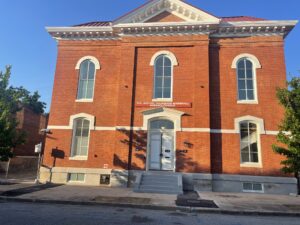
The Baron and Company Cigar building at 1007 East Pratt Street lies within the South Central Historic District, along Central Avenue just east of Little Italy. Most of the structures in this area are vernacular rowhouses but a few, including the Cigar Building, are much larger industrial buildings that help give the area its distinctive flair. Baron and Company Cigars first occupied the space beginning about 1880, and by 1910 a company called the American Coat Pad Company had moved in. American Coat Pad was an apparel company that distributed throughout the United States, Mexico and Canada devoting itself exclusively to the little poofy parts of men’s and women’s coat fronts. In 2010, Mr. James Seay and his company, Premier Rides, Inc., along with Fishell  Architecture, renovated the building into office space for a number of companies and light manufacturers.

The current restoration included saving and restoring existing doors, replicating metal windows where the originals had deteriorated too badly to be salvaged, and keeping the original metal shutters. The interior spaces were largely compatible for light manufacturing, and were kept intact, with much patching of plaster of course. Many of the original interior doors were salvageable and were kept, as was much of the original wooden flooring. Overall, the work seems squarely in keeping with the purposes for which this late 19th century industrial building was built. Starting out life as a cigar company, then as a clothing manufacturer, it has a new lease on life as offices and light manufacturing.

Read on for more shots of the building from before and after this award winning rehabilitation!
Continue reading

A fantastic (and wet) celebration of this year’s historic preservation highlights

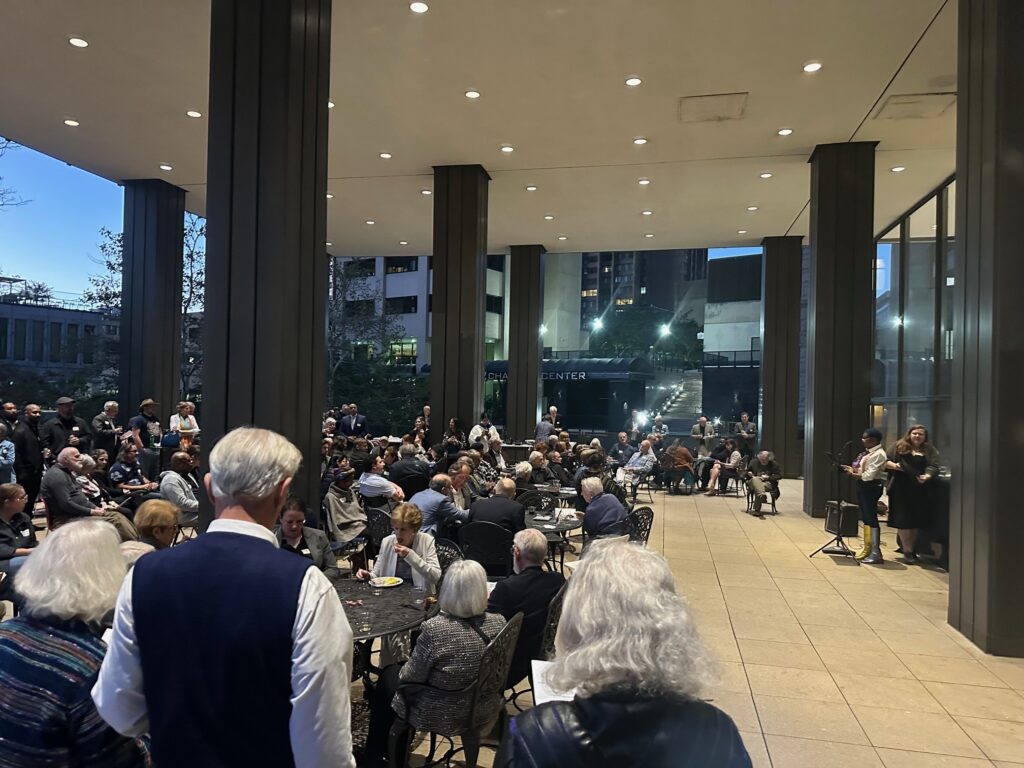
This past year ushered in great historic preservation work around Baltimore, and we at Baltimore Heritage were pleased to recognize some of the best projects and the people behind them in our 2011 Preservation Awards Celebration last Friday in Union Square. With a series of thundershowers sweeping through West Baltimore exactly at the moment the outdoor program was set to begin, the event was a wet and wild time. Some call Baltimore the “City of Firsts.” We lay claim to the house of the first American saint (Elizabeth Ann Seton), the first umbrella factory (William Beehler, 1828), the first African American Supreme Court Justice (Thurgood Marshall), and the tallest building up to the Civil War (the Shot Tower). And now I think we can lay claim to having the wettest historic preservation awards event ever.

With the untiring work of a horde of volunteers and board members, and gracious hosting by the Union Square Association and many residents around the Square, 300 people from around Baltimore celebrated the best historic preservation projects of the year (listed below), and got more than a fair share of summer showers. Historic Union Square shone brightly, and despite the rain, or maybe even because of it, many of us reaffirmed our appreciation for Baltimore’s great historic places and those who work to preserve and revitalize them. This is the first in a series of posts that will highlight the people and projects that won preservation awards this year from Baltimore Heritage. I hope you enjoy learning a little more about some wonderful buildings and the great efforts that have gone into saving them.

I would be remiss if I didn’t thank our hosts for the event, the Union Square Association, the gracious owners who opened their houses for house tours, our corporate sponsors, all of our volunteers, and the intrepid event committee: Jim Suttner (chair), Elise Butler, Lisa Doyle, Jean Hankey, Lesley Humphreys, Mary Beth Lennon, and Stephen Sattler. Read on for a full list of our 2011 Preservation Award Winners and check out our many photos from the evening celebration on Flickr.

Continue reading

Open Houses at the 2011 Baltimore Heritage Preservation Awards

Union Square Park, 2011 Baltimore Heritage Awards Celebration

29 S. Stricker Street, Open House for 2011 Baltimore Heritage Awards CelebrationThis year, we’re trying something new to help celebrate the Baltimore’s best historic preservation projects and the people behind them–we’re holding our 2011 awards gala outdoors in historic Union Square park. We hope you can join us for a festive evening beginning with a set of private open houses around the Square, including the Hollins Street rowhouse where H.L. Mencken lived and wrote and the grand Turnbull Mansion whose restoration was a true labor of love.

Open houses will be followed by dinner, drinks and live music under the stars in one of Baltimore’s most treasured historic spaces. If you haven’t been to Union Square in a while (or even if you live right next door), please join us in honoring the great work that is going on in West Baltimore and the entire city.

Union Square, West Baltimore | Friday, June 10, 2011

  • 4:30 PM | Open Houses
  • 5:30 PM | Reception
  • 6:45 PM | Awards and Dinner

$60 for Baltimore Heritage Members ($70 for non-members. Join!)
Purchase tickets online today!

Remembering William Donald Schaefer

William Donald Schaefer shaped the Baltimore we have today perhaps as much as anyone. Baltimore Heritage did not always see eye-to-eye with the former mayor and governor, and indeed we fought vehemently against projects he supported, including highways proposed for Baltimore’s waterfront and the east-west connector in West Baltimore that threatened and demolished historic buildings and neighborhoods. On other issues, Governor Schaefer was a friend and leader for preservation, including the Dollar House Program and preserving the West Side of downtown. Former Baltimore Heritage President Fred Shoken joins us in remembering William Donald Schaefer with a guest post–

The highlight of my career as President of Baltimore Heritage was presenting William Donald Schaefer with the 1993 Douglas H. Gordon Award for Preservation Advocacy.

When the Board of Directors first considered Governor Schaefer for this honor, we envisioned giving the award to someone who after many years of public service ultimately became convinced that preservation was important. We would honor an individual who championed our cause and carried it forward. After reviewing his career in more detail, we realized the opposite was true. William Donald Schaefer was the leader in creating the foundations upon which Baltimore’s preservation movement was built.

While preservationists were busy fighting individual concerns, trying to save one building or the next, William Donald Schaefer saw the big picture. He realized that nothing could be preserved and no community could be revitalized without convincing people to take pride in their neighborhoods. He made it his mission to restore neighborhood pride in Baltimore City, and he was effective.

He knew that people who are not proud of their history, of their community, of their city, will do nothing to preserve their heritage. Without pride of place, there is no preservation. People who are not proud of themselves or of their neighborhoods are destructive. They tear down rather than build up. People who are proud of their history and heritage will preserve the symbols of the past and work to improve the future. William Donald Schaefer worked harder than anyone to restore pride in our neighborhoods. This, more than anything else, allowed preservation to flourish in Baltimore.

There is no doubt that conflicts will exist between preservationists and government officials on particular issues. Preservationists had battles with William Donald Schaefer. Some we won … others we lost, but that was not a factor in honoring the Governor. We honored William Donald Schaefer because deep down he was proud of the history and accomplishments of Baltimore City and the State of Maryland. His pride in Baltimore made him a great advocate in preserving Baltimore’s historic and architectural heritage. In turn he made others proud, which aided the cause of preservation. For this reason William Donald Schaefer deserved recognition from Baltimore Heritage and our thanks.

Fred Shoken, President of Baltimore Heritage, 1988-1994

2011 Preservation Awards Call for Nominations!

Baltimore Heritage is seeking your nominations for Baltimore’s best historic preservation projects and leaders, from exceptional restorations to new neighborhood tour programs. We’re excited to continue last year’s new award categories offering special recognition to smaller DIY projects with our Sweat Equity Award and celebrating small organizations and communities that are working to preserve and promote historic neighborhood places through the Historic Baltimore Neighborhoods award. For inspiration, check out our series on 2010 Preservation Award Winners, including great adaptive reuse and restoration projects like the Hotel Brexton, the Elisha Tyson House, Miller’s Court, and, of course, the American Brewery.

We have designed our online nomination form to be fast and easy with two main parts:

  • A short narrative (250-1000 words) about the project or achievement and a list of participants
  • Photographs of the project or related to the achievement submitted by e-mail or on CD.

Continue on to learn more about our six categories ranging from large commercial redevelopments to DIY rowhouse rehabs then submit your nomination online today. Self nominations are encouraged. The deadline for accepting nominations is April 2, 2011. Continue reading

2010 Preservation Awards: Housewerks

Image courtesy Tracey Clark

Tracey Clark and Ben Riddleberger purchased the 1885 gas valve building historically known as the Chesapeake Gas Works in 2005 to house their architectural salvage business, Housewerks. Over the past five years Riddleberger and Clark have stabilized and restored the long vacant building (also known as Bayard Station) and have highlighted its many fine details. These include ornamental plaster and woodwork, fireplaces, 10 foot high Palladian windows and a granite walls on the lower level. They extensively researched the history of the building and proudly display early images throughout their store. In addition, they worked with the Pigtown neighborhood in 2006 to have the building included on the National Register of Historic Places. With more than a little sweat, the building now is a centerpiece in a quickly changing industrial part of South Baltimore.

Image courtesy Tracey Clark

2010 Preservation Awards: Elisha Tyson House

Image courtesy Mark Thistel

Image courtesy Mark Thistel

Originally the summer home of industrialist and abolitionist Elisha Tyson in the early 1800s, 732 Pacific Street is a classic Federal style house built with native granite two feet thick. Among many other accomplishments, Tyson helped finance the very profitable Falls Road Turnpike in 1805 and reportedly established safe houses for runaway slaves along the route. The building on Pacific Street was later owned by the Mount Vernon Mill Company and used as a superintendent’s house for the mill complex. Robyn Lyles and Mark Thistle (also a Baltimore Heritage board member) purchased the house in 2005 and finished renovations in 2009. The rehab project included archeology work by the University of Maryland, painstakingly saving windows including the original antique glass, and disassembling and reassembling the porch to save the original materials. 13,000 hours of work later, the finished product is a masterpiece of historic preservation.

The award goes to owners Robyn Lyles and Mark Thistle, SMG Architects, and contractor Traditional Builders. For more information check out this great feature in Urbanite Magazine with a slideshow on the house and a profile on Elisha Tyson. You can also enjoy a few photos from our recent Behind the Scenes Tour of Mount Vernon Mill No. 1, just around the corner from the Elisha Tyson House.
Continue reading

2010 Preservation Awards: Falls Road Residence

Today’s post is the beginning of a new category for our 2010 Baltimore Heritage Preservation Award winners.  The Restoration and Rehab Award recognizes that restoration or rehabilitation of historic commercial, institutional or residential buildings that have maintained the basic historic function of the building. Our first award-winner in this category is the Hampden Residence of Ezra Hercenberg at 3415 Falls Road.

Image courtesy Julie Tice

With new vinyl siding on the front and every single window missing, the building at 3415 Falls Road appeared an unlikely candidate for any type of historic preservation project.  Undaunted, the owner, Ezra Hercenberg, and his architect Julie Tice, charged in.  They removed the vinyl to reveal original German siding, which they preserved in place.  They repaired the porch, saving as much original material as they could, and they even were able to preserve the original cornice.  The end result is a wonderfully restored historic structure that brings new life to the Hamden historic district.

Image courtesy Julie Tice

2010 Preservation Awards: UB Liberal Arts and Policy Building

Image courtesy Cho Benn Holback + Associates

The University of Baltimore’s Liberal Arts and Policy Building at 10 W. Preston Street originally housed the Knights of Pythias, a fraternal secret society founded in 1894 and the first such society to be incorporated under an act of Congress. The co-educational institution, University of Baltimore, acquired the building and undertook an extensive renovation project in which the original stained glass and spiral stairs were restored, as was the limestone fronts along Charles Street. The work even uncovered the original tile floor, which was cleaned and reused. The University of Baltimore is the owner and Cho Benn Holback + Associates was the architect.
Continue reading

2010 Preservation Awards: Professional Arts Building

Image courtesy Kann Partners

Originally constructed as the “Medical Arts Building” in 1927, the Professional Arts Building at 101 West Read Street served as offices for medical personnel until it saw a decline in occupancy in the 1990s. The large 110,000 square foot building was left more than seventy-five percent vacant for a decade prior to its rehabilitation in 2009. Restoration work included repairing the original terra cotta balustrade, refurbishing the main lobby and elevator lobbies in the upper floors, and restoring the storefront on Cathedral Street. Kann Partners was the architect and Struever Bros. Eccles & Rouse were the builders.
Continue reading